

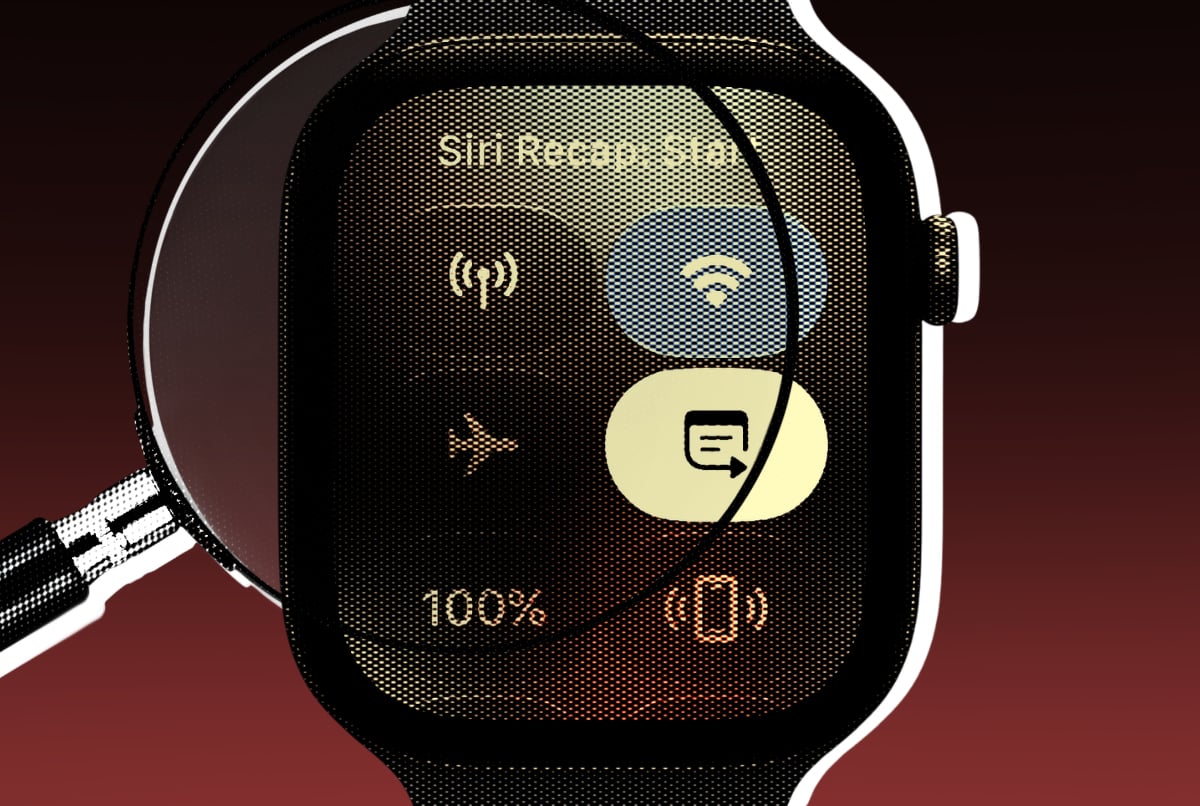
While most people have assumed their devices have been listening to them, Apple’s newest smartwatches can now listen to your conversations on purpose. Audio Intelligence, a set of features on the Apple Watch Series 12 and Apple Watch Ultra 4, includes Siri Recap, which summarizes what you’ve talked about during the day, and Live Rewind, which shows a transcript of the last 15 seconds of speech. The features are still in beta, and early testers have mixed feelings.
Apple groups four features under Audio Intelligence: music recognition (Shazam, which now identifies songs automatically), sound recognition for alerts like doorbells and crying babies, Live Rewind, and Siri Recap. You must opt-in for each feature. Once you turn Siri Recap on, you choose when it listens, either all day, on a schedule like 9 a.m. to 5 p.m., or with a toggle in Control Center, and the watch reminds you that it’s active. Recaps don’t identify who said what, don’t include a transcript, and can’t be played back as audio, and they’re deleted after about a week unless you save them to Notes. The features aren’t available for everyone: you need a Series 12 or Ultra 4 paired with an iPhone 16 or later (but not the 16e). They also aren’t available in the EU or China, and teens 13 to 17 need parental approval. Apple says it plans a public release later this year.
The features perform differently. CNET tested Audio Intelligence for two weeks and found Live Rewind mostly unhelpful. Fifteen seconds goes quickly; it’s easier to ask someone to repeat themselves. Because by the time you realize you missed something, the moment has passed. Siri Recap seems to work a bit better, especially in meetings. During a live YouTube test, it caught facts the reviewer missed while typing in chat, like how many times a phone folds in a decade. But it also mistook names and, in one case, the wrong child in a carpool conversation. “Rather than coming away better informed,” the reviewer wrote, “I came away feeling validated by the sheer chaos of it all.”
And it does seem a bit chaotic. Siri Recap sometimes merged unrelated conversations into one summary, including a serious talk about a medical condition and a story about exploding apple cider. A second reviewer found the recaps both “useful and unsettling.” The summary of a family member’s illness referred to the wrong person as “father,” and a disagreement with the reviewer’s son was flattened into a debate about space colonization. “I would be a fool to rely on the recaps,” that reviewer wrote. The overall advice from early users? Turn it on deliberately, for a meeting or an appointment, tell everyone involved, and keep a backup if the stakes are high.
But is it ethical to record people when they don’t know they are being recorded? Live Rewind chimes when it’s used, though the chime has been described as barely audible. Siri Recap has no clear signal to people nearby that their words are being summarized. The Electronic Frontier Foundation has said ambient monitoring burdens conversational privacy because bystanders can’t consent. About a dozen states, including California, Massachusetts, Pennsylvania, and Washington, require all parties to consent to recording, and one analysis says attorneys see possible exposure in those states. For now, no court has ruled on whether summarizing speech without keeping audio violates the existing laws. Even those who reviewed the features felt uneasy about it. One said it felt wrong to let people talk without knowing, and hesitated to publish what friends had said in what they assumed was a private setting.
The privacy concern is similar to the backlash against Meta’s smart glasses. It all comes down to the same question of who gets to capture what, and who gets to say no.
So is it creepy or cool? Both. The technology is clever, the privacy design is more careful than most, and recaps can genuinely help in a meeting. But it’s inaccurate often enough that you shouldn’t trust it, and it asks the people around you to accept something they never agreed to. If your watch is listening, shouldn’t everyone else get a say?