

No, but the fact that people are asking the question says a lot about the creator economy.
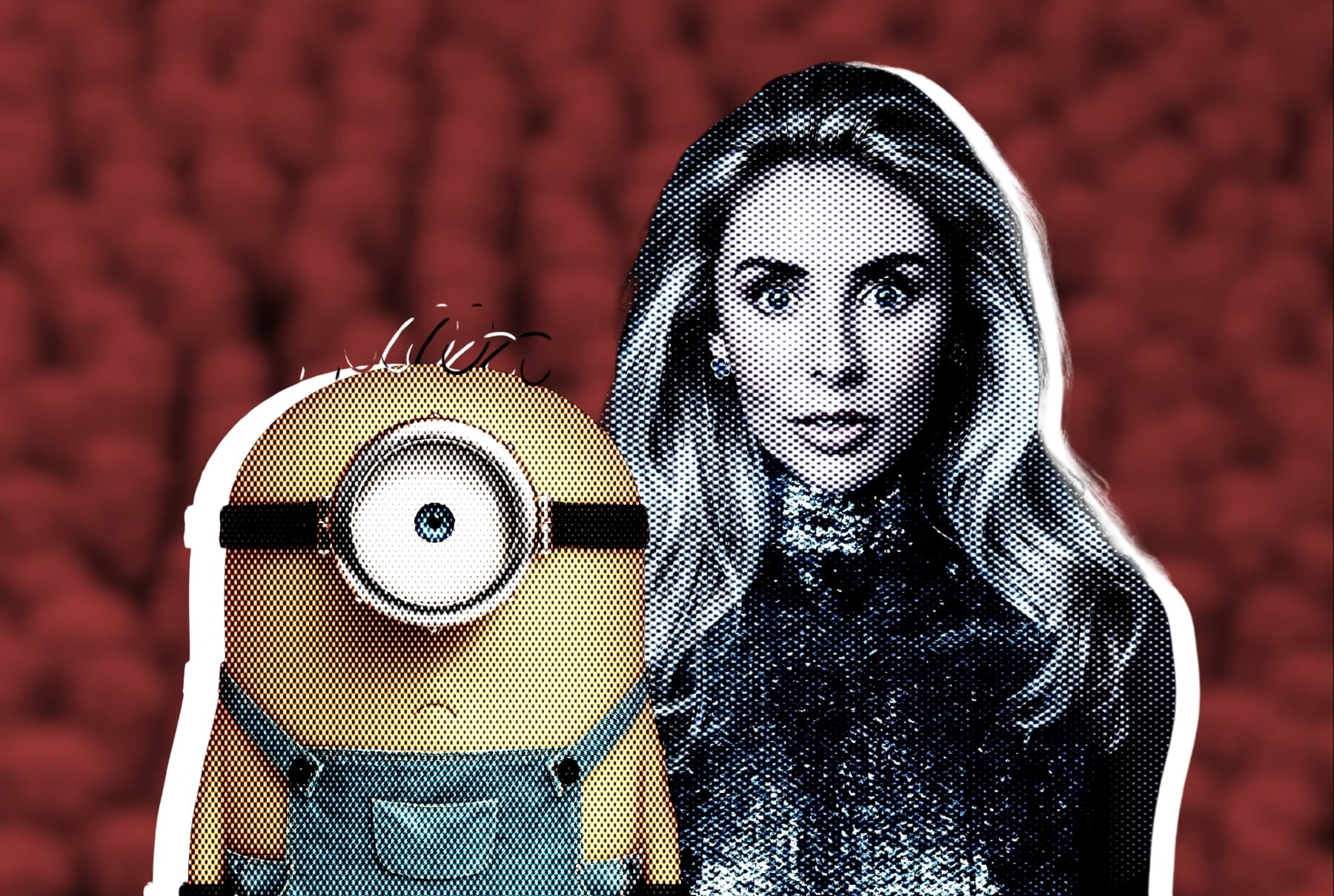
Thousands of parents sitting in darkened theaters convinced themselves that a yellow gibberish-speaking cartoon character shouted out a notorious British OnlyFans creator’s name during a World Cup-themed promotional clip. It didn’t actually happen, but the fact that so many people had the same question is astounding.
It’s also something that wouldn’t have happened five years ago.
The clip in question comes from Minions and Monsters, the latest film in the Minions franchise, which has been pumping out movies since 2010. The World Cup tie-in promo shows the little yellow creatures facing off against movie monsters in a football match. At one point, a Minion seems to be shouting names like Dua Lipa and Sabrina Carpenter. That’s when viewers think another Minion responds by shouting “Bonnie Blue.”
The internet did what it always does, and the clip went viral. Some parents panicked, while others found it hilarious. TikTok weighed in with great enthusiasm. The discourse was, briefly, unhinged in the most delightful way possible.
Meanwhile, the film’s director was baffled. Pierre Coffin went back to the recordings to investigate. “Apparently, I’m saying this other person’s name,” he said in an interview with The Movie Dweeb. “I’m bringing it up because I said, ‘Am I saying that?’ So I went back to them because I didn’t know that person.”
Turns out he was right. What audiences heard was actually part of the surname of one of the film’s animators, Omid Rajabalipour. The “balipour” portion apparently sounds, to ears primed by social media, like “Bonnie Blue.” “People hear that other person’s name, which is very strange,” Coffin said. Just like that, the mystery was solved. The internet had, once again, heard what it wanted to, not what was actually said.
But here’s the fascinating part: the fact that thousands of people heard it at all is the real story here.
Bonnie Blue is a UK-based adult content creator known for increasingly boundary-pushing content. She was banned from OnlyFans last year after some eyebrow-raising stunts, and she hasn’t stopped based on her recent golden baby shower stunt. The escalating stunts have made her simultaneously one of the most talked-about and most controversial figures in the adult creator economy. She is not, by any traditional media metric, a mainstream celebrity. She hasn’t been on a talk show, she doesn’t have a record deal, and she isn’t starring in the latest HBO series.
And yet enough people recognized her name on instinct that in a split second of Minion gibberish, it went viral on multiple platforms and forced the film’s director to issue a formal clarification.
That’s how culturally embedded Bonnie Blue and OnlyFans have become in today’s society. Five years ago, this wouldn’t have happened. But now, the creator economy has reached cultural saturation where an adult content creator’s name would be part of the ambient noise that people pattern-match to automatically. Five years ago, you would have needed to be actively following adult content to know names in that space. Today, you could be taking your kids to a Minions movie and have enough cultural context to think you heard one.
This is what mainstream looks like when it sneaks up on you. It’s not a cover sotry or award show moment. It’s when a name becomes part of the background noise of culture, the stuff that people recognize without quite knowing how or when they learned it. Bonnie Blue is there, along with OnlyFans, which seems to be everywhere – in major television shows, at Paris Fashion Week, and even in Olympic training facilities. The platform has become a punchline, a political lightning rod, and a genuine economic force all at once.
The creator economy has been arguing for years that it deserves to be taken seriously. The arguments have been good ones, and the data backed them up. But the data didn’t quite capture the moment as accurately as the Minions/Bonnie Blue mixup has. Because it is clear that the creator economy is simply part of the cultural furniture now. It’s present enough that people can find it in places it isn’t.
Cultural relevance isn’t just measured by headlines. Sometimes it’s measured by what people think they hear in gibberish.