
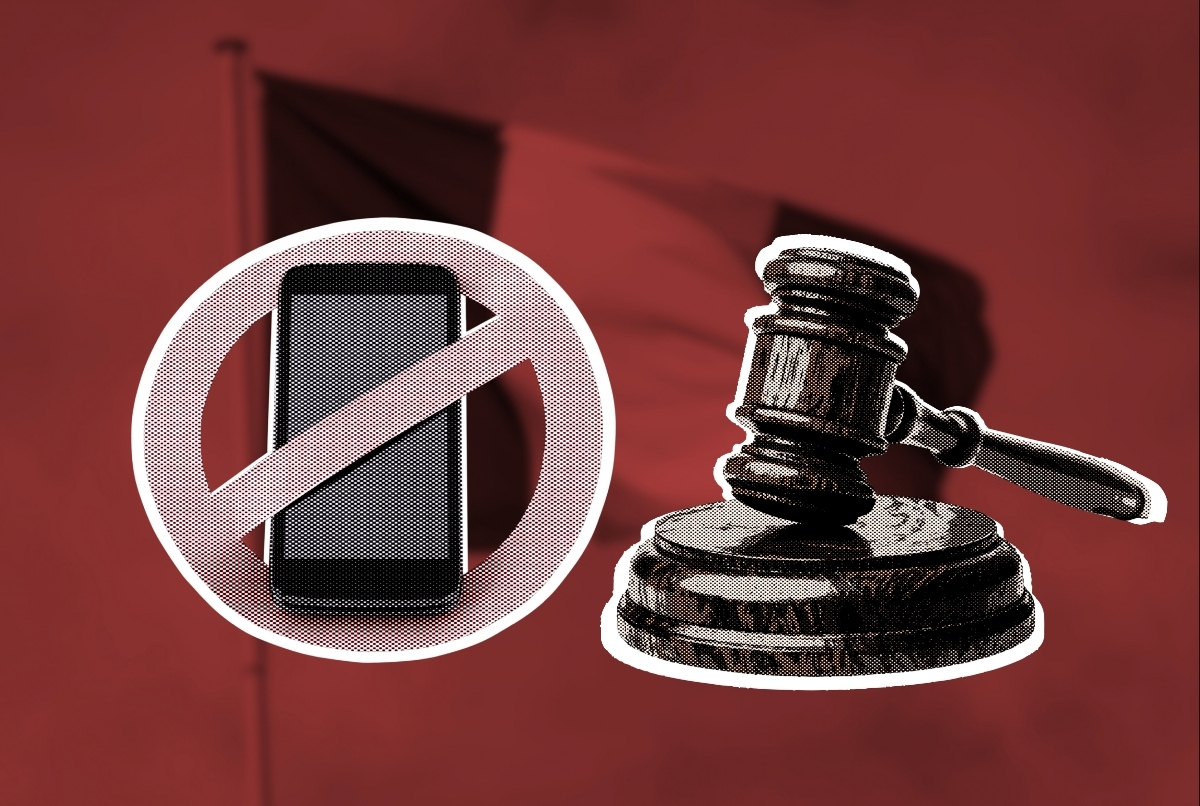
France’s National Assembly opened debate this week on legislation that claims to combat gender-based violence but could functionally outlaw the country’s entire direct-to-consumer adult content industry. And yes, that means OnlyFans, MYM, LoyalFans, and Fansly. More than five million French users combined visit OnlyFans and MYM alone every month. And all of those users could find themselves unable to access the platform as this legal redefinition works its way through parliament.
Bill 3106 is broad legislation aimed at sexual and gender-based violence, championed by a multipartisan group of feminist lawmakers led by Socialist MP Céline Thiébault-Martinez and backed by numerous advocacy organizations. But buried inside its roughly 69 articles is Article 25, the provision that worries creators and fans. French law currently punishes clients of in-person sex work and anyone profiting from it, but the country’s highest court, the Court of Cassation, previously ruled that camming and remote content don’t qualify as prostitution because there’s no physical contact involved. Article 25 rewrites that distinction and expands the legal definition of prostitution to explicitly include online sexual acts performed for payment. That means that platforms hosting streaming or custom content could be treated as pimps. Users who tip creators or commission custom content could be treated as johns. Violators (including platforms and intermediaries) would face up to seven years in prison and a fine of around €500,000, while individual consumers would face fines starting at €1,500 and rising to €3,000 for repeat offenses.
Industry attorney Corey Silverstein laid out the core problem with this broad type of legislation.”Preventing sexual violence and exploitation is essential, but legislation must distinguish abuse from consensual adult expression,” he said. “This proposal risks criminalizing adults who create sexual content voluntarily and the services that support their work. Broad, poorly defined criminal prohibitions can push creators into less transparent environments and make exploitation harder to detect.” His recommendation is one that keeps popping up in similar debates across multiple countries: lawmakers should target coercion, trafficking, and child protection specifically, with clear legal definitions, rather than criminalizing an entire category of consensual, legal work because it shares a payment structure with something truly harmful.
France isn’t the first country to try this. Sweden adopted nearly identical legislation in 2025, criminalizing the purchase of “remote” online sexual services and mentioning OnlyFans by name throughout the law. It was a move that’s already reshaped how Swedish creators operate, forcing some into legal gray zones just to keep earning income that was perfectly legal before the law passed. France’s bill doesn’t name specific companies, but the mechanism is basically the same Nordic Model framework extended into digital space, following the same country-by-country pattern showing up across Europe, including the UK’s parallel push toward device-level age verification.
But now French creators fighting the bill are no longer fighting alone. The left-wing France Unbowed party, holding 71 of the National Assembly’s 577 seats, has filed an amendment to strip the ban entirely, using almost the exact argument creators themselves have been making. That shutting down legal, traceable platforms doesn’t eliminate the underlying activity; it just pushes it into unregulated, far less safe channels. Their amendment states plainly that criminalizing intermediaries “would not eliminate the activity, but would simply shift it to unregulated, less traceable, and far less protective channels, further exposing those involved to the very risks the article purports to combat.” A second caucus, the Ecologist and Social group, raised a related but distinct objection, arguing that remote content creation and physical sex work “do not present exactly the same issues of protection, health and recognition,” and that penalizing clients has historically pushed sex workers into secrecy rather than eliminating the work itself.
The bill currently sits with a special committee, and is anything but settled. Whether it survives in its current form now depends on whether these new parliamentary allies can build enough momentum to strip Article 25 out entirely, or whether France joins Sweden in extending Nordic Model logic into a digital economy that operates nothing like the street-level sex work these laws were originally built to address. Millions of French users and creators are currently waiting to find out which version of that argument wins.