

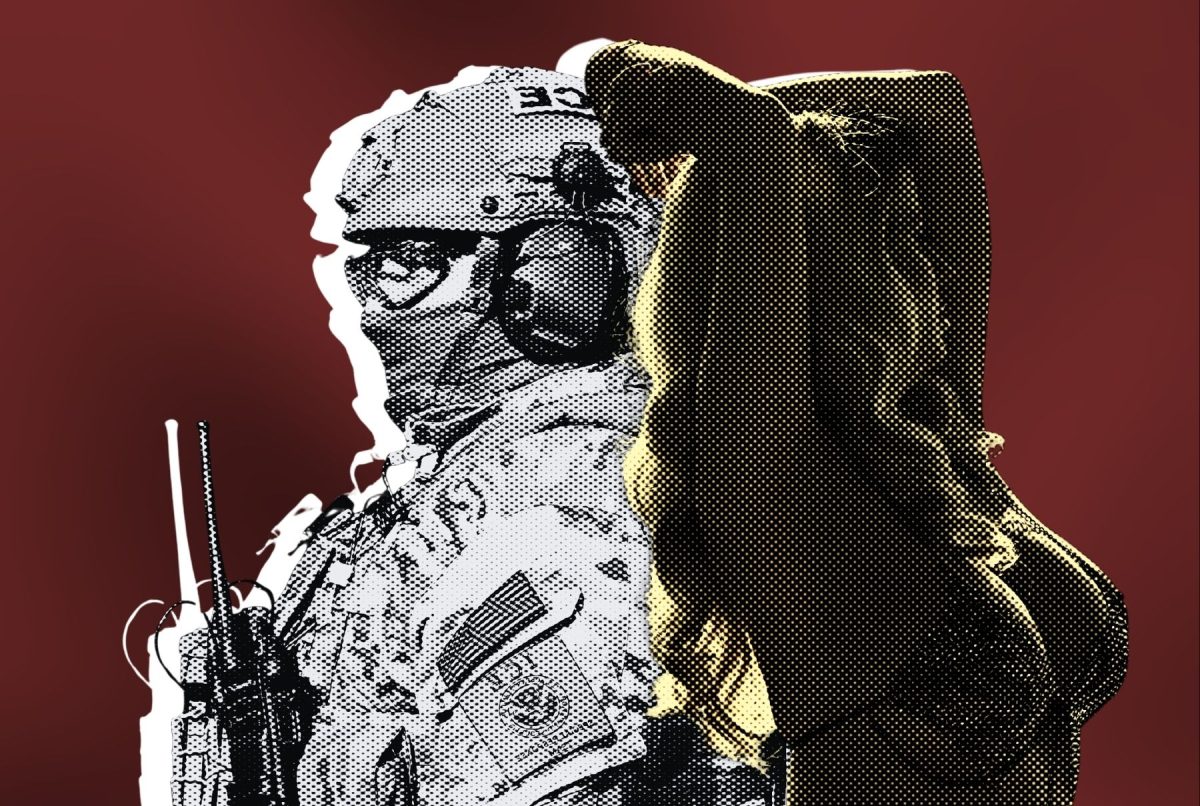
US immigration policy is currently dealing with something of a contradiction. The same profession that can earn someone a prestigious “extraordinary ability” visa can also earn them a five-year border ban, depending almost entirely on which side of an undefined legal line an algorithm decides they’re standing on.
Let’s start with the five-year border ban. Recently, escort Gigi Lenoir went viral after a friend in the industry got pulled aside at the US border. She was shown printouts of her own website and told she was banned from the country for five years. That led to Lenoir sharing her warning: “Ladies that are face out, be careful. Facial recognition is out of control.” The left sex workers talking about how exposed their online presence actually leaves them.
A former State Department immigration official began to look into the situation. Unofficially, of course. They spoke with an American sex worker, a dual citizen, who described being pulled into secondary screening on a return trip home despite holding US citizenship, which meant deportation was never legally possible. That didn’t stop an unidentified man in a suit from questioning her, deliberately speaking in her second country’s language as though testing her fluency, searching her bags, and pressing her about income sources and exact home addresses. That seems more like a computer flag rather than random selection. When asked directly whether CBP uses facial recognition to identify sex workers, the agency’s spokesperson didn’t deny it, instead offering boilerplate language about biometric tools supporting “lawful border security operations,” and citing the Immigration and Nationality Act’s provision that anyone who’s “engaged in prostitution” within the past decade “may appear to be inadmissible.”
But how exactly are they defining prostitution? After all, there’s no clear definition of “prostitution” or “commercialized vice” anywhere in the statute, and the justification isn’t rooted in fighting trafficking or exploitation. If anything, officers have reportedly been pulled off actual trafficking investigations to handle broader immigration enforcement instead. The bans apply even to people whose sex work was completely legal wherever they actually did it. Courts have long recognized how shaky this all is. A landmark 1975 case (Matter of Hranka) established that visitor waivers should be granted on minimal grounds even for someone previously deported over sex work, because the underlying standard was never clear to begin with.
Yet while some sex workers are being banned from the country due to facial recognition flagging, others are earning O-1 “extraordinary ability” visas as successful OnlyFans creators, some of whom also engage in sex work on the platform. Immigration lawyers have said that social media influencers, adult creators very much included, now make up more than half their clientele for these visas. Not because of any special legal carve-out, but because follower counts and engagement metrics are simply the easiest and quantifiable proof of “talent” an applicant can offer. The law treats adult content production like any other entertainment career… unless it crosses into “commercialized vice.” But where is the line? It isn’t clear, and that’s the problem.
The sex worker who spoke about her border experience put the real-world class divide bluntly: “Girls that are high-end and citizens serving exclusively rich clientele have a way different experience to girls working the streets to live.” That’s why creators are trying to protect themselves online. Face-blurring has become an informal industry standard in hopes of offering some deterrent against an individual stalker. But that won’t stop government-grade facial recognition, as it measures underlying facial geometry, and most creators’ blurring technology doesn’t do anything to impact that. To achieve actual anonymity, people speculate that you’d have show no visible face at all and no tattoos, have no platform tied to verified ID, and receive payment exclusively through untraceable channels. That kind of security is basically incompatible with running an OnlyFans or Fansly account, since both require ID verification just to sign up.
And that’s the problem. There are new pushes to tie online identity to verified ID all over the world, sold as protection against exploitation, but they de-anonymizes creators to governments they’ve never worked in, may never visit, and never consented to being tracked by. A European creator opening an OnlyFans account may be quietly identifying herself to US immigration in the process, with no idea that’s even a possibility. The result isn’t a system making informed distinctions about who deserves entry. It’s one rewarding whoever’s wealthy and visible enough to look like “extraordinary talent” on paper, while banning whoever an unaccountable algorithm happens to flag first. Seems a little unfair, doesn’t it?